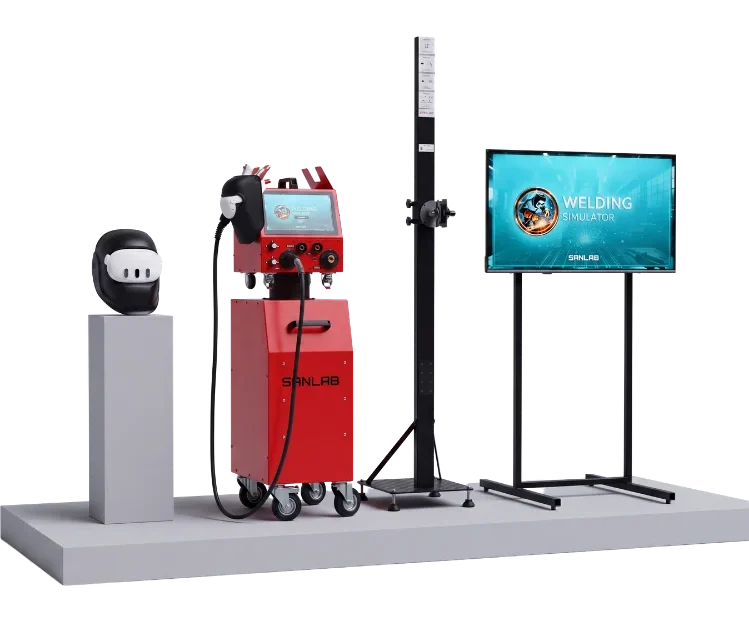
One Platform,
Three Configurations
From a full training station to software only deployment choose the setup that fits your facility, budget, and class size.

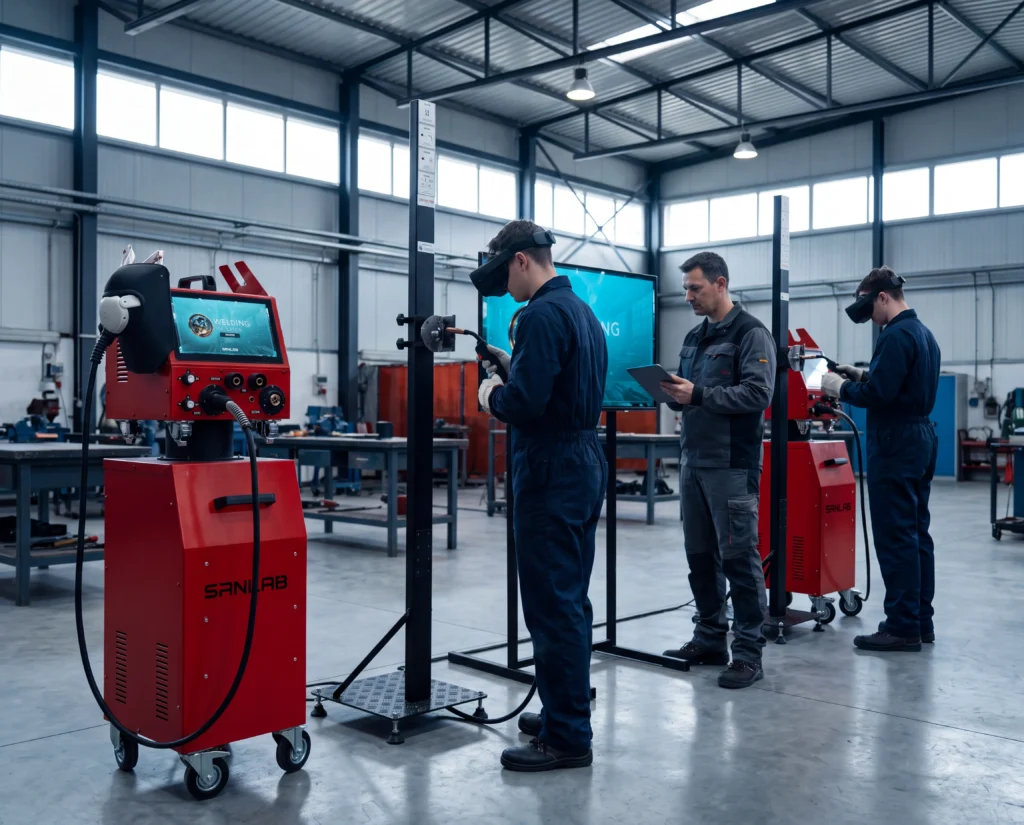
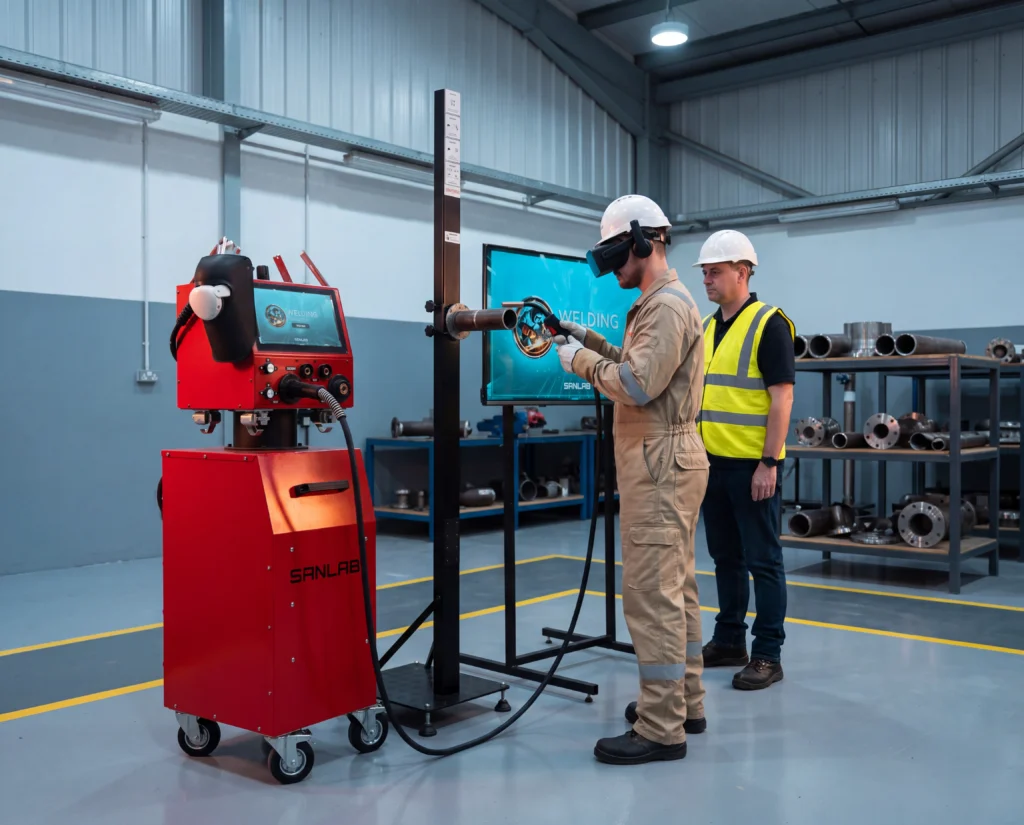
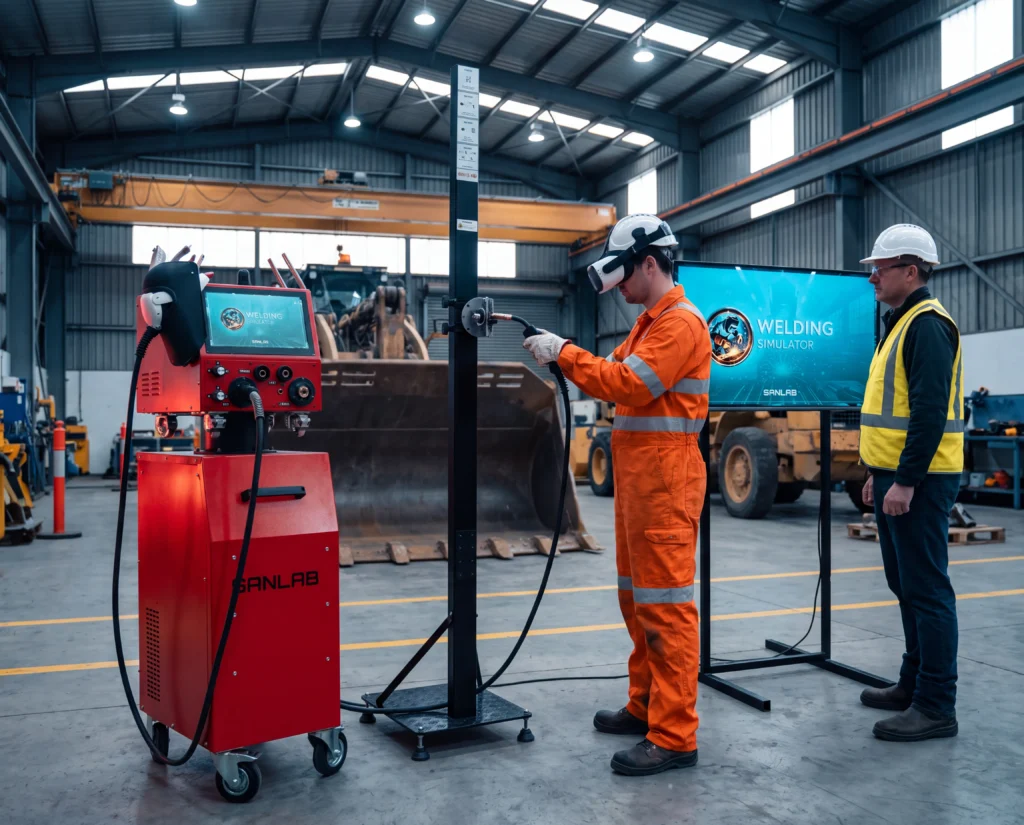
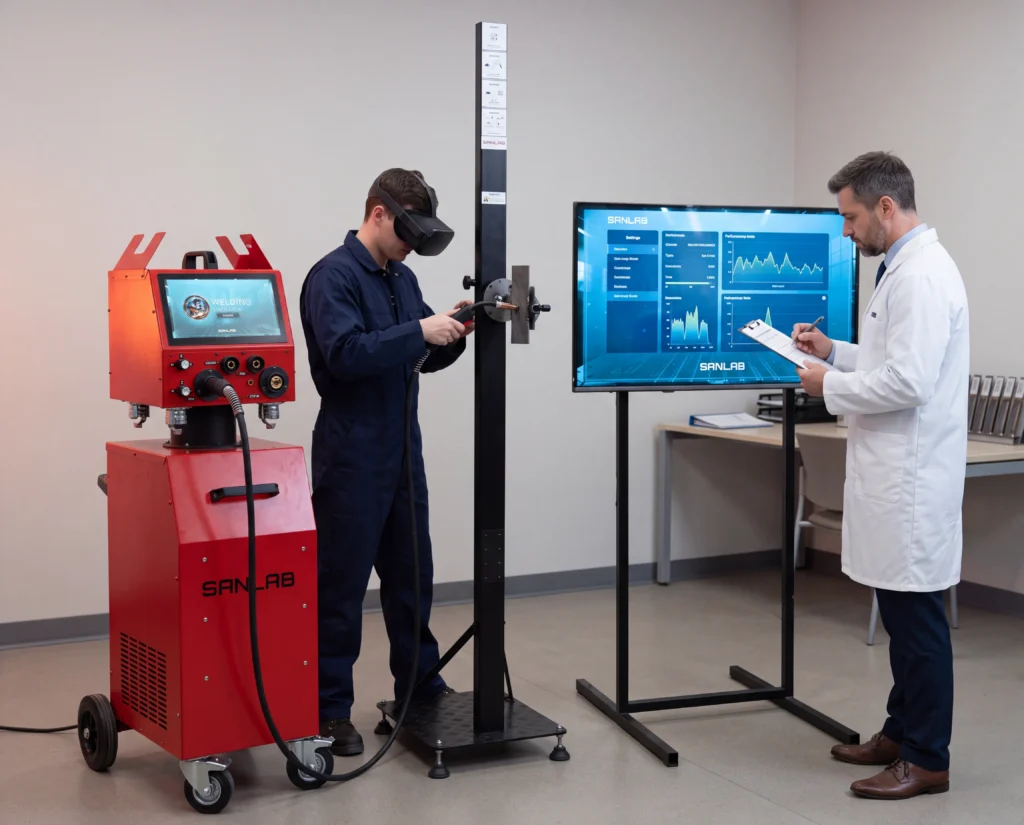
Experience full-scale welding training with VR, real torches, and interactive feedback—all in one compact simulator.

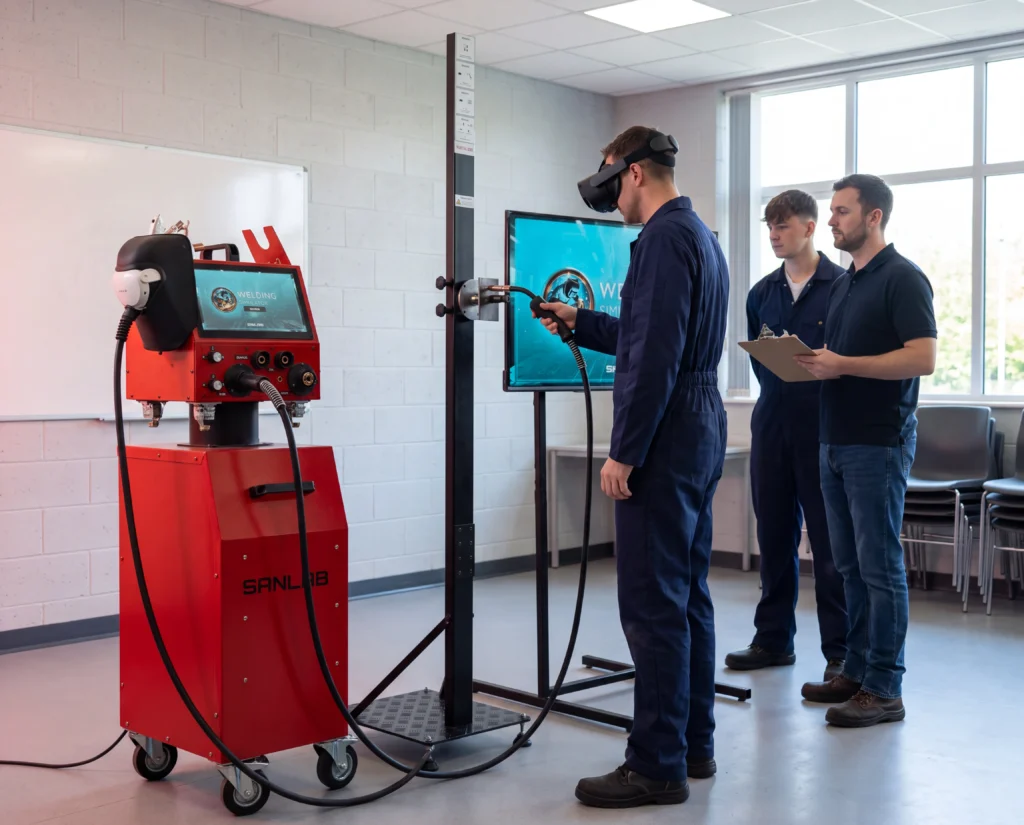
Compact welding simulation software powered by VR, ideal for immersive training in classrooms and workshop environments.
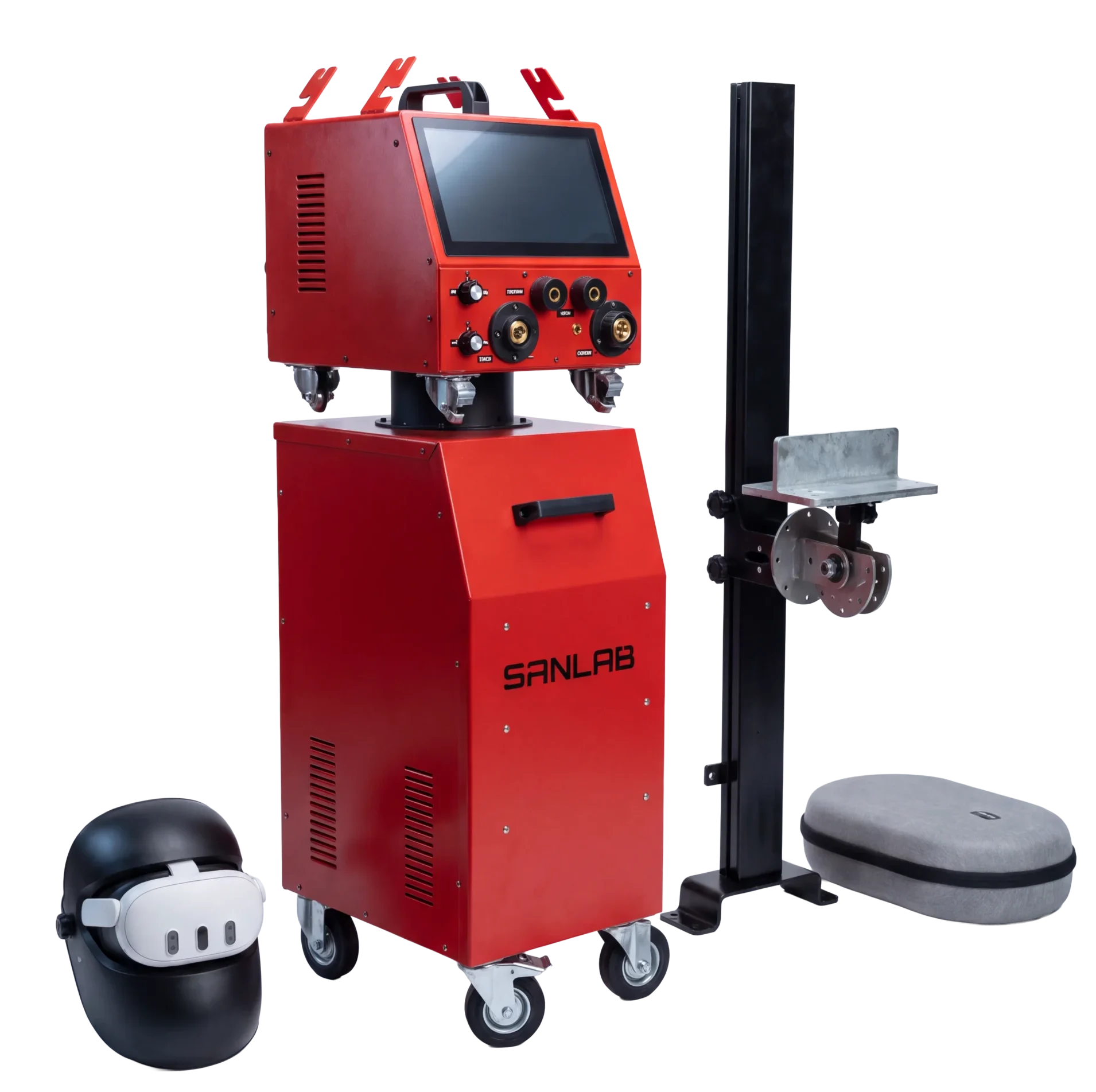
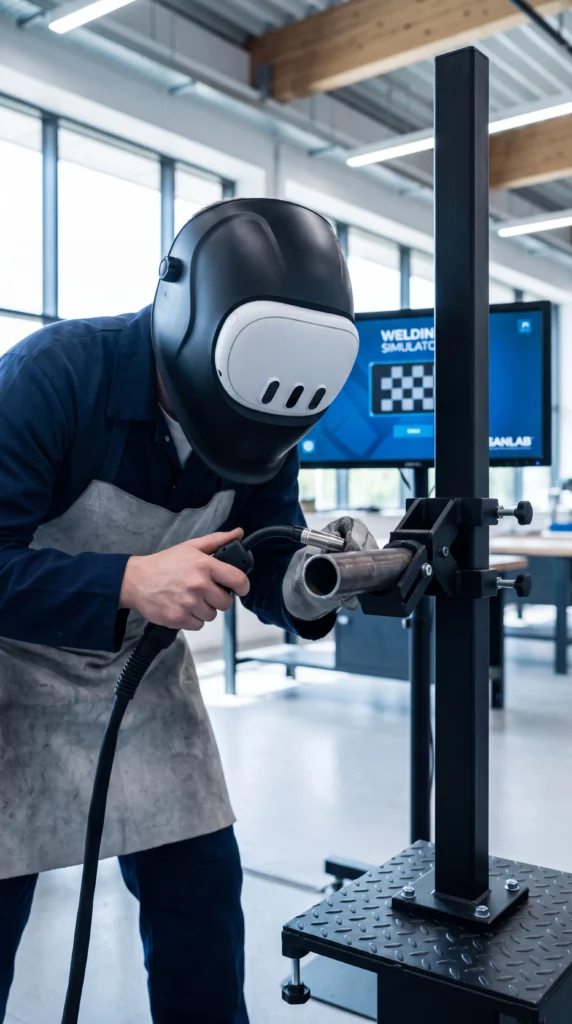
A compact VR welding simulator designed for flexible, hands-on training—ideal for classrooms, workshops, and on-site field use.
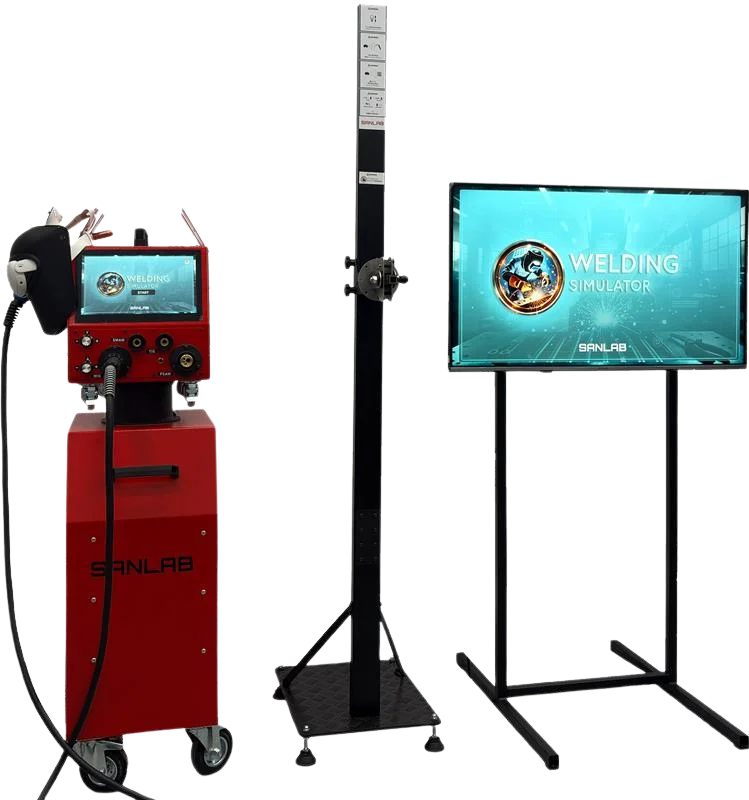
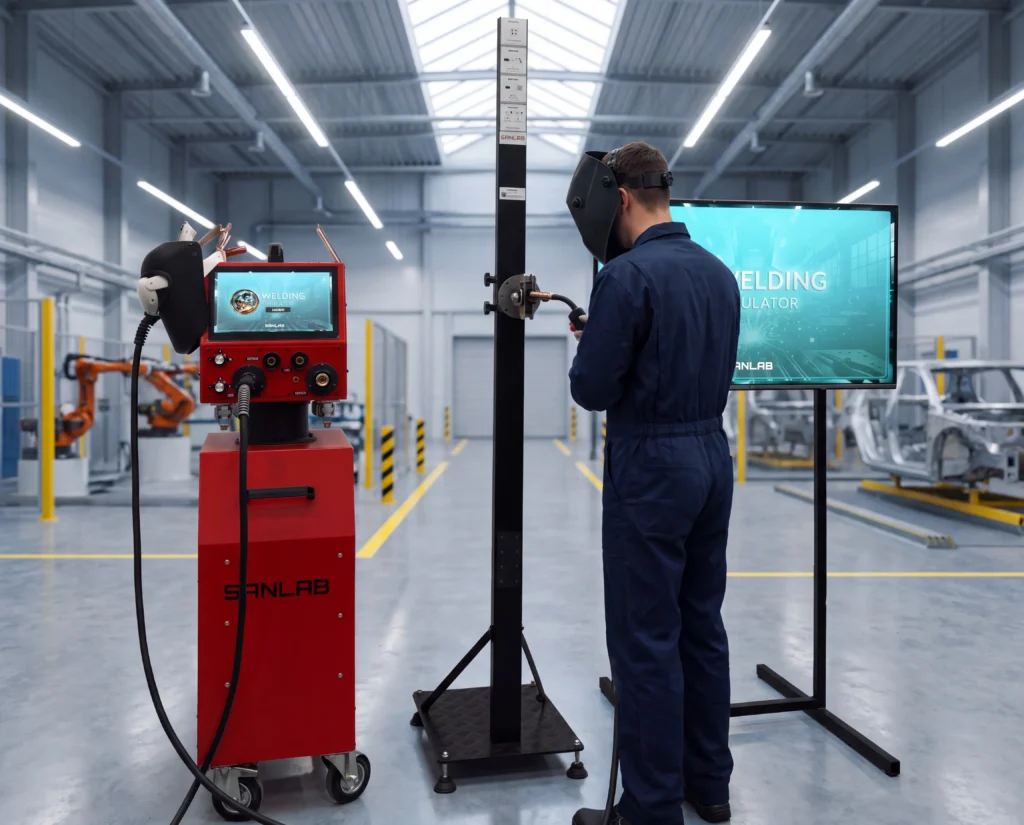
Trainees weld with real torches and real body movement, while the system measures every pass. Instructors see exactly where technique breaks down and trainees repeat until it doesn't. No gas, no consumables, no waiting for a free booth.
Real torches, real motion tracking, real feedback. Trainees repeat the same joint as many times as it takes, with no gas, no metal, no waiting for a free booth. Every pass is measured, so mistakes get named instead of guessed at, and instructors follow the whole class from one screen.
See it in a live online demo with our team. No installation, no hardware on your side.
Track, Learn and Improve. Weld with Confidence

Tracks lateral placement along the weld line, so trainees stay centered on the joint instead of drifting off the seam.
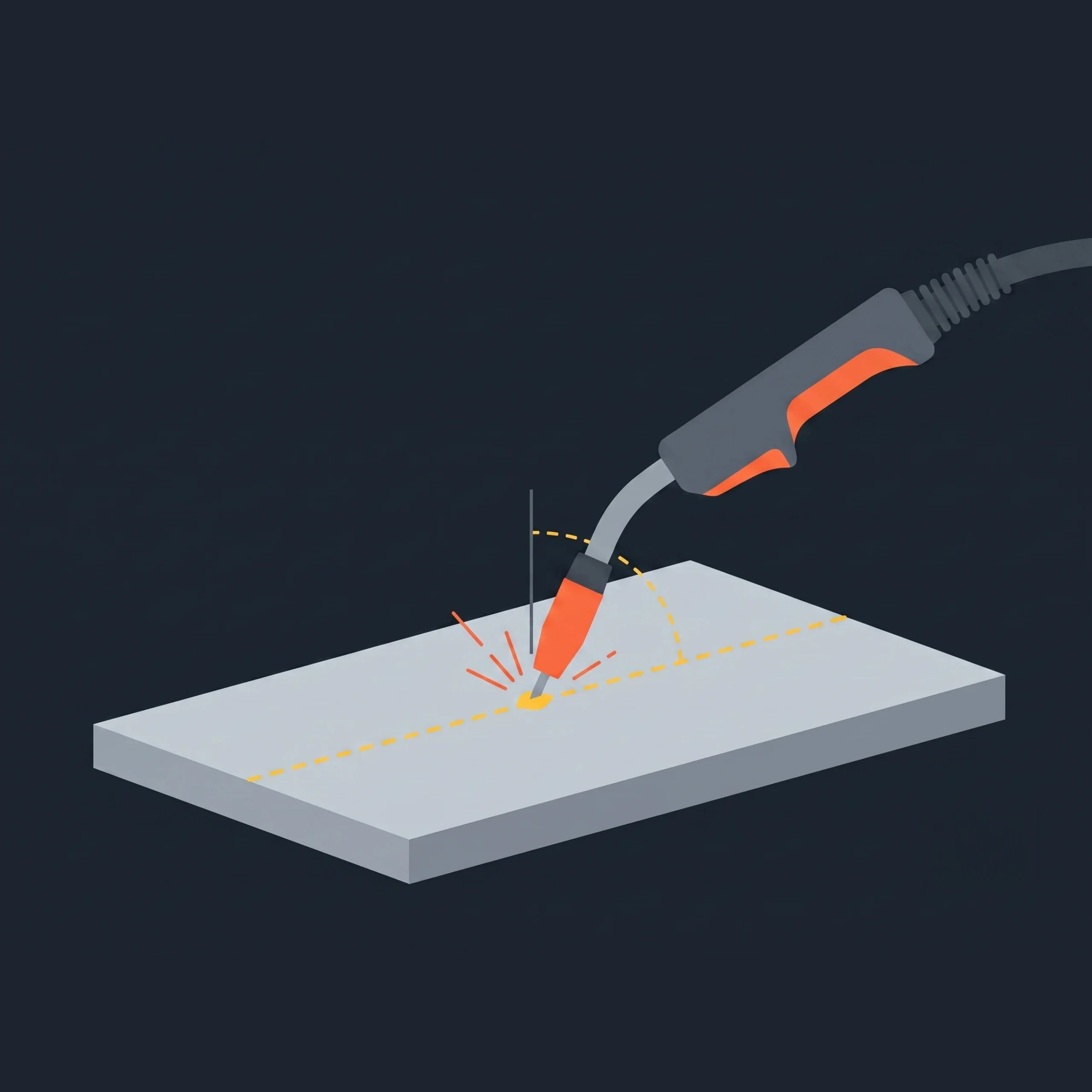
Monitors work and travel angle through every pass, correcting electrode orientation as the joint type and position change.

Measures how fast the torch moves along the joint, flagging deviations that leave the bead too thin, too wide, or uneven.

Analyzes the gap between contact tip and workpiece, keeping stick-out consistent so the arc stays stable from start to finish.
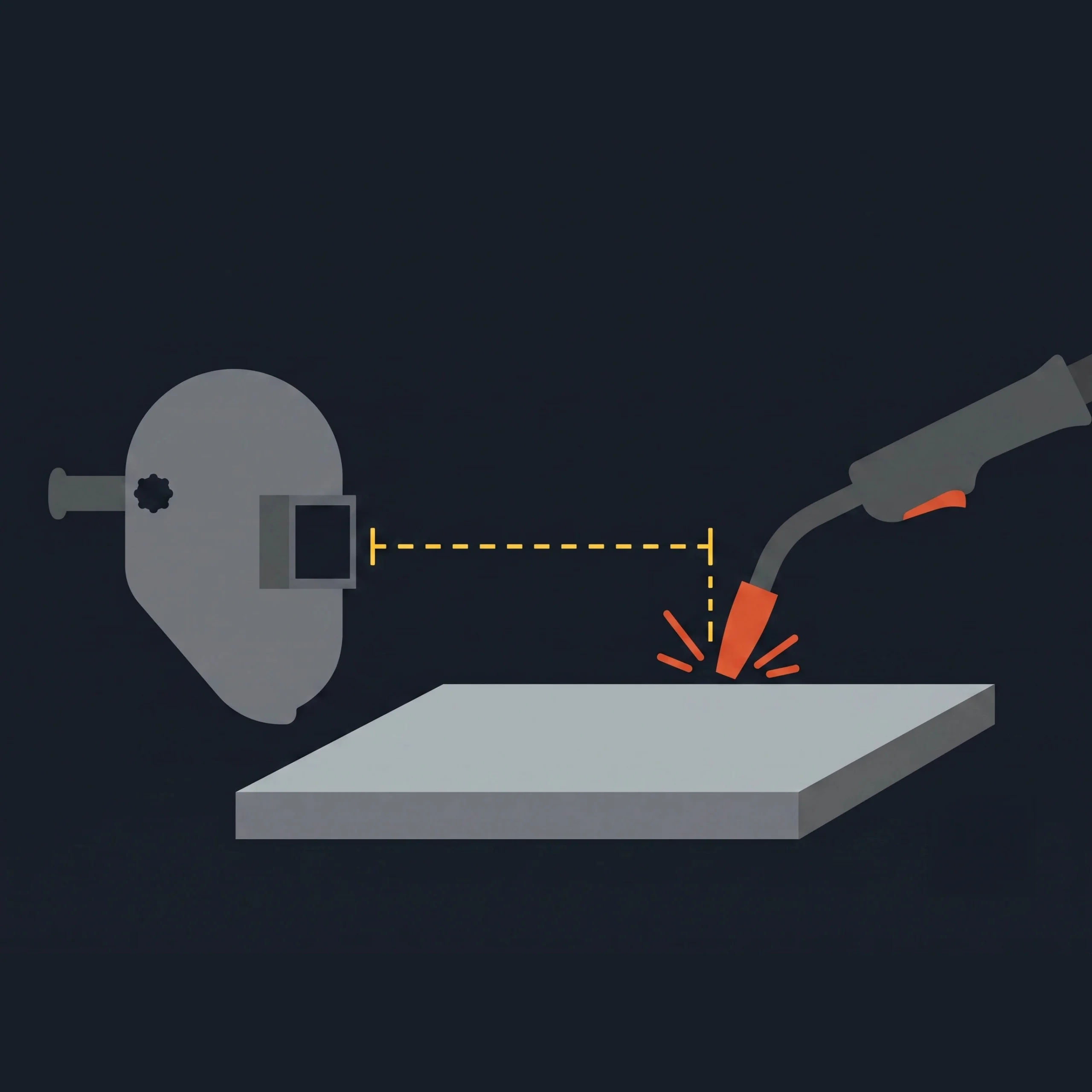
Tracks how close the helmet stays to the work, so trainees see the puddle clearly without compromising posture or safety.


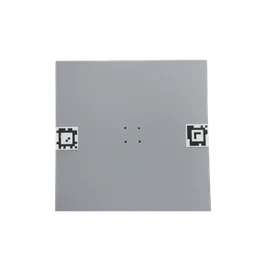
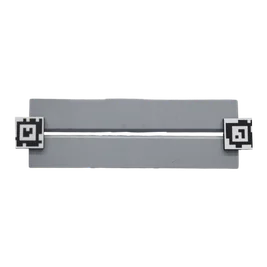
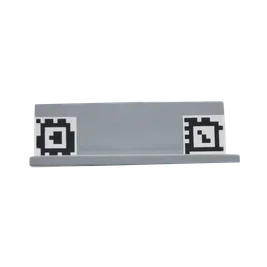
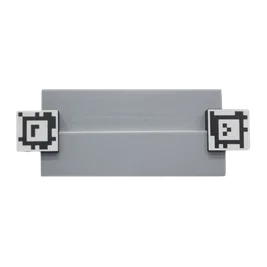
New hires reach production standard faster when they build technique on a simulator instead of on scrap. Whether the work is body-in-white assembly, structural fabrication, or heavy equipment repair, every pass is measured, so training stays consistent across plants, shifts, and instructors. Stations run anywhere on site, with no gas, no consumables, and no booth downtime.

A class of thirty can practice the same joint on the same day, without booth queues or a supervisor watching every attempt. Students see exactly where technique breaks down and repeat until it holds, at zero consumable cost. Instructors track progress across the whole cohort from one screen, with reports that support assessment and accreditation records.

Training centers are measured on throughput and pass rates, not on how much steel they consume. Simulator stations let several trainees practice at once without booths, extraction, or shielding gas, and recorded metrics show who is ready for live work and who needs another week. Programs stay consistent whether they run for a single employer or a mixed intake.

Public and nonprofit programs are funded on placement rates, so what matters is how many trainees finish employable and how quickly. Simulator stations let a cohort start on day one without a full welding shop, and every session produces a record of progress that satisfies funders, auditors, and employers. Learners with no prior experience build technique safely; returning workers refresh skills without occupying a live booth.

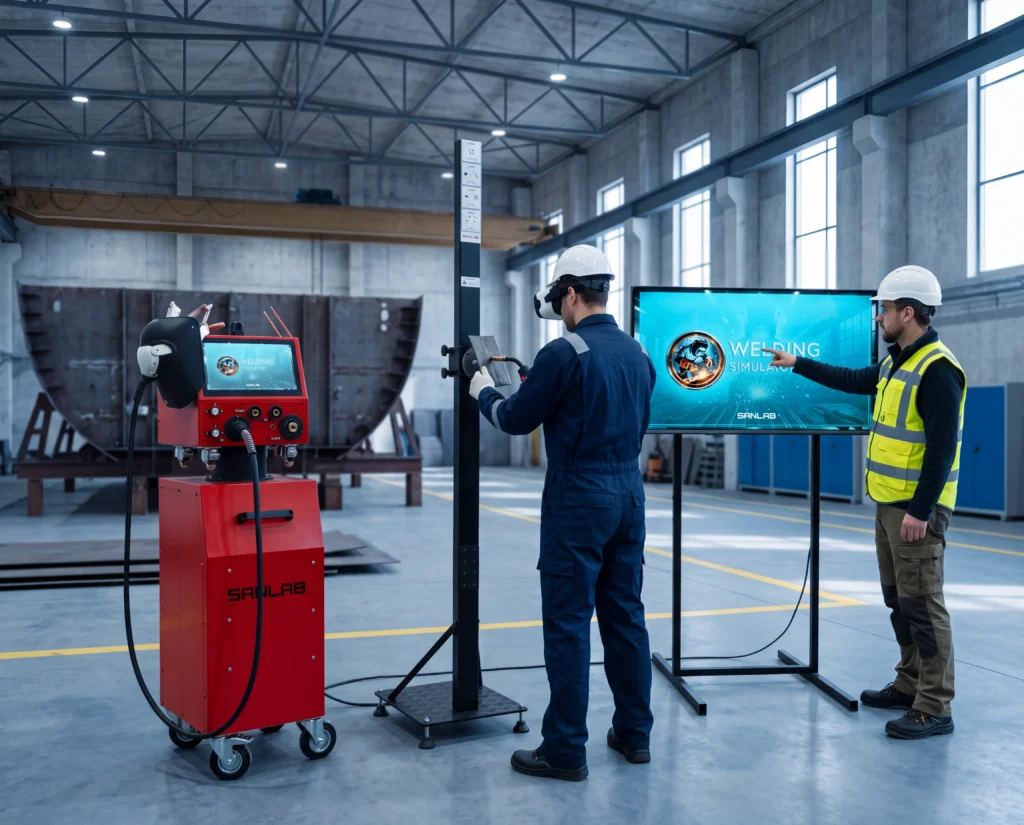
Master the hardest positions before stepping into the hull
Overhead, vertical-up, and confined-space welding take the longest to learn and cost the most to teach in a live yard. On the simulator a trainee can repeat a 4F overhead pass fifty times in an afternoon, with torch angle and travel speed measured on every attempt. Welders arrive at the block already competent in position, so yard time goes to production instead of practice.

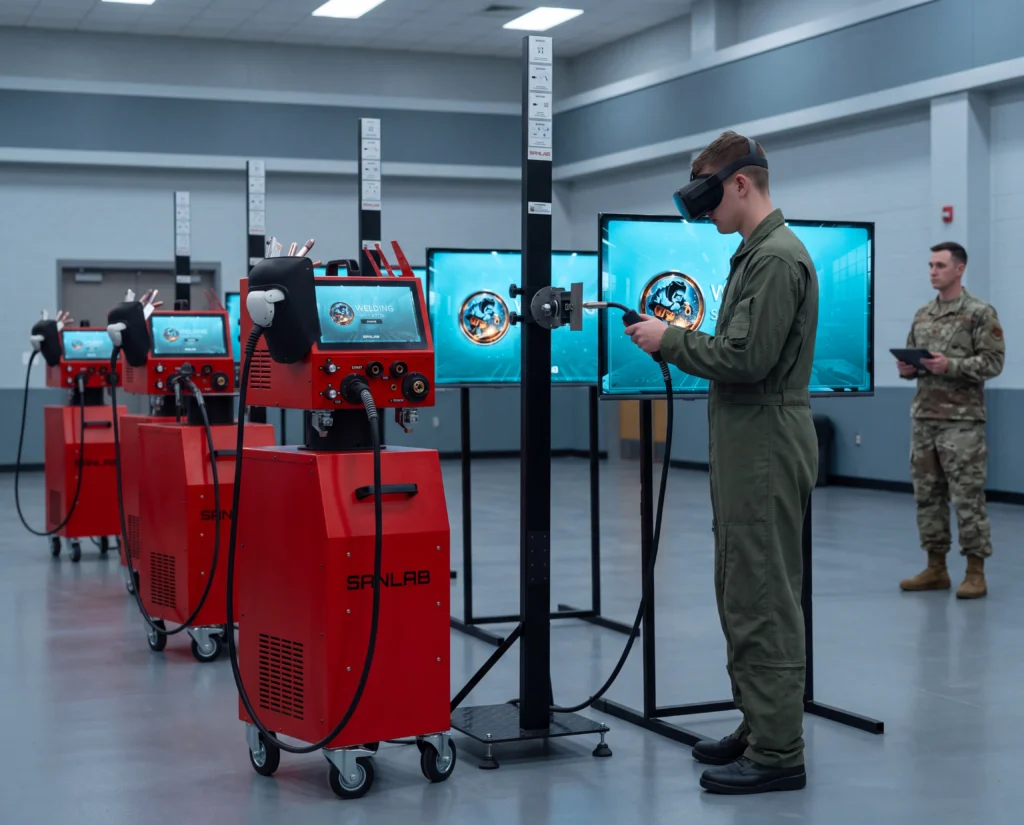
Standardized welder training across ministries, military technical schools, and national programs
National training programs are judged on scale and consistency, not on individual results. Simulator stations deliver the same curriculum and assessment criteria at every site, while central reporting provides evidence of completion, progression, and competency across cohorts and locations for procurement and oversight bodies. Systems deploy on site with no welding shop, extraction, or gas infrastructure required.

Build pipe welding skill before it reaches a pressure joint
In pipeline, refinery, and plant work a single failed weld means shutdown, re-test, and lost production. Trainees practice 2G, 5G, and 6G pipe positions as many times as it takes, with root pass technique measured on every attempt and no coupon cost per repetition. Contractors screen candidates before mobilizing them to site, and shutdown crews stay current between turnarounds instead of losing skill during downtime.

Keep repair capability on site, not three days away
When a bucket, chute, or crusher liner cracks, the cost is measured in downtime per hour. Sites that can weld their own repairs recover faster, but building that capability usually means sending crews off site for weeks. A simulator station runs in the maintenance workshop or the camp training room, letting technicians build and refresh technique between shifts. Every session is recorded, so supervisors know who is qualified for structural repair work before the next breakdown.

Pre-qualify candidates before they consume a test coupon
Test centers lose time and material on candidates who were never ready. Screening on a simulator identifies who can hold position, angle, and travel speed consistently, so only prepared candidates go through to the live qualification test. Every attempt produces an objective record rather than an examiner's judgment call, which supports fair, defensible, and auditable assessment decisions. Centers raise first-time pass rates without lowering the standard.

Qualify structural welders on site, across every project location
Projects move, crews change, and every new site needs welders qualified to the same structural standard. Sending people back to a central training facility costs weeks of schedule. A simulator station travels with the project and runs in a site office or container, so crews build and verify technique where the work is. Recorded metrics give site engineers and EPC clients documented evidence of competency before anyone welds on a structural connection.
Welding Training Statistics Overview
Reach out via our contact form and we'll respond shortly.
FAQ
Licenses are available as subscription or perpetual purchase. The software runs on PC and VR headsets and integrates with compatible
hardware. Contact our sales team for pricing, configuration, and delivery timelines.
Yes. We run live online demos where our team walks you through the software, training scenarios, and reporting tools in a scheduled session no installation or hardware required on your side.
Yes. The system records travel speed, torch angle, torch position, and work distance for every pass. Instructors receive reports covering total score, success rate, repetition count, and safety compliance exportable for assessment and accreditation records.
Yes, without limit. Trainees repeat any scenario as often as needed, at their own pace, with no consumable cost per attempt.
Two models: subscription, which includes ongoing updates and support for a fixed term, and perpetual, a one-time fee for lifetime access.
Choose based on your program length and budget cycle.
Yes. WeldSoft is available separately for institutions that already own VR hardware or want to start software-only and add stations later.
The simulator covers SMAW, MIG/MAG, TIG, and FCAW, with scenarios aligned to AWS and ISO welding standards.